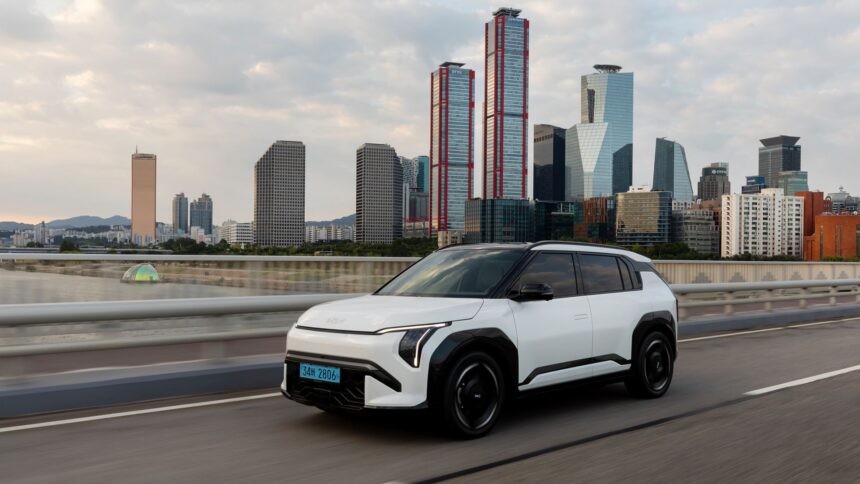
When Kia introduced the EV3 in May of last year, the brand unveiled a vehicle designed to make sustainable, effortless mobility more accessible than ever. With the goal of fulfilling this promise, Kia’s all-new compact all-electric SUV incorporates cutting-edge technology, offering a WLTP driving range of up to 600 km and fast-charging capabilities.
The EV3’s remarkable combination of features ensures that customers can transition seamlessly from a traditional internal combustion engine (ICE) vehicle to an electric vehicle (EV) without concerns.
Kia’s development team set out to create an all-electric SUV that would exceed expectations for a compact electric model. This ambition led them to establish new standards, incorporating intelligent regenerative braking and the ability to power or charge external devices, such as camping equipment. These innovations open up a host of lifestyle and driving features that were previously unavailable in this segment.
At the core of the EV3 lies pioneering, world-first technology, with Kia’s engineers ensuring these innovations offer tangible benefits for the occupants.
i-Pedal Innovations
Kia has continuously pushed the boundaries of innovation and has further advanced its regenerative braking technology with the upgraded i-Pedal 3.0 and Smart Regenerative 3.0 systems for the EV3. These systems elevate the concept of one-pedal driving, offering improved efficiency and driving enjoyment.
The upgraded i-Pedal 3.0 provides drivers with more flexibility and control by allowing them to separate regenerative braking levels from full stopping functions. Full one-pedal driving can now be utilized in all braking modes, with i-Pedal 3.0 also being available in reverse. Additionally, the system remembers the last selected setting when the vehicle is turned off. This can be activated by pulling the left-hand steering wheel paddle for over a second.
Regenerative braking levels range from 0 to 3. Level 3 offers substantial braking, making it ideal for stop-and-go traffic, while also providing smoother results through more linear calibration. Level 2 provides moderate braking force, ideal for winding roads, allowing drivers to decelerate smoothly for corners without using the brake pedal. This approach helps extend the driving range.
For highway driving, Level 1 or even Level 0 may be preferred, enabling the EV3 to coast freely when the accelerator is released. These lower levels offer more comfort-focused deceleration.
Smart Tech for a Relaxed Drive
The Kia EV3 is the first vehicle to feature Hyundai Motor Group’s Smart Regenerative System 3.0, an intelligent technology that acts as a digital co-pilot, scanning the road ahead and reacting swiftly to potential hazards.
Engaged by pressing the right-hand steering wheel paddle for over a second, the system integrates autonomous driving features with regenerative braking. It uses sensors and navigation data to automatically decelerate when approaching slower-moving traffic or obstacles, ensuring the vehicle slows down to a safe speed when necessary.
While previous versions of Kia’s Smart Regenerative System relied on GPS data, this new system expands its capabilities by using more diverse navigation data, offering additional advantages. For instance, the system automatically reduces speed when approaching curves, speed bumps, or roundabouts, creating a more relaxed, efficient, and safe driving experience.
The Smart Regenerative System 3.0 also helps reduce stress when navigating busy urban areas. The latest technology allows the EV3 to come to a complete stop, offering even greater flexibility compared to previous versions, which could only slow the vehicle to 9 km/h.
Reassuring Range and Advanced Aerodynamics
Kia’s engineers have worked tirelessly to ensure the EV3 delivers both impressive efficiency and peace of mind to drivers, particularly for those new to electric mobility. The EV3 is equipped with the largest battery in its class—a 81.4 kWh fourth-generation unit, offering a remarkable 600 km range under the WLTP standard. This battery boasts a 22% higher energy density compared to the Niro EV, which shares the same 400V architecture.
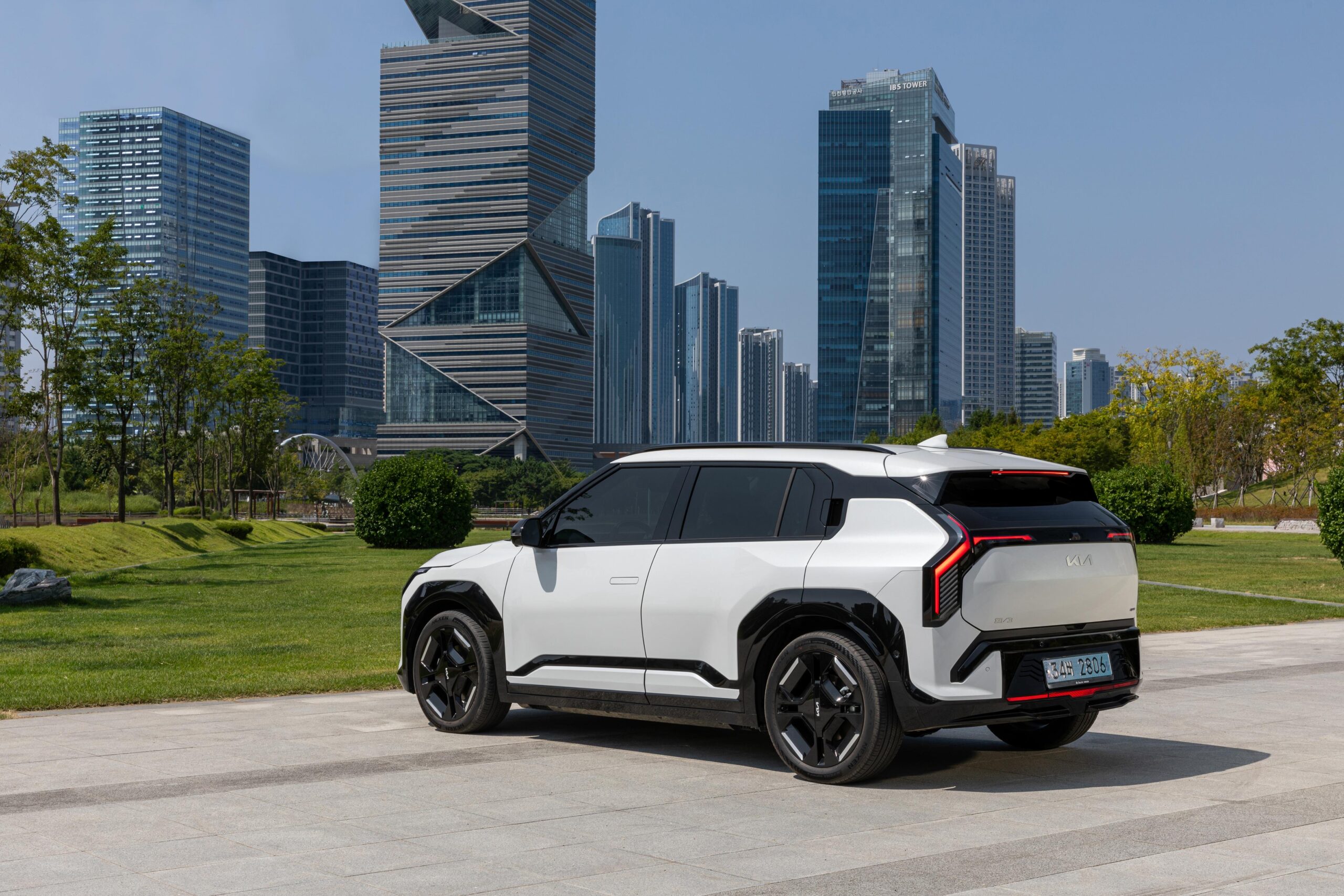
In addition to the battery, Kia’s team spent countless hours optimizing the EV3’s aerodynamics in a wind tunnel. The SUV features enhanced wheel shapes, improved rear combination lamps, new side sill undercovers, and underbody covers, all of which reduce drag and improve airflow beneath the car. With a drag coefficient of just 0.26Cd, the EV3 glides effortlessly through the air.
The rear wheel arches are narrower than the front, giving the vehicle a boat-tail shape that maximizes electric driving range, particularly on longer journeys.
On-Board Efficiency Coach
To help drivers make the most of every charge, Kia has introduced the ‘Driving Range Guide’ technology in the EV3’s instrument cluster. This feature provides real-time feedback on driving efficiency by displaying the estimated range based on driving style. A green gauge indicates efficient driving, while an orange gauge shows reduced range when efficiency is not optimized. This simple feature encourages drivers to enjoy a more efficient driving experience.
Efficient Driving in All Conditions
Kia’s commitment to making the EV3 more accessible extends to a variety of driving conditions. The EV3 is the first vehicle to deploy a simultaneous heat absorption system, allowing it to recycle waste heat from both the vehicle and the surrounding air to optimize efficiency. The car’s advanced heat pump technology enhances battery protection and charging performance in cold weather.
The EV3 also features a liquid cooling system for its battery, improving thermal management during charging and boosting charging speeds. The vehicle charges 12 minutes faster than the Niro EV, reaching 80% capacity in just 31 minutes (Long Range model, under 350 kW fast-charging conditions).
Thanks to the first-ever highly efficient and compact THIN HVAC system, the EV3 ensures consistent cabin conditions, maximizing comfort and giving front-seat passengers an extra 6 cm of footwell space compared to conventional systems.
Accessible Advanced Technology
Inside the EV3, Kia has created a spacious and comfortable environment for passengers to enjoy both while traveling and when stationary. The vehicle’s cutting-edge connectivity features enable occupants to engage with the digital world in new and immersive ways.
Kia is the first manufacturer to introduce Vehicle-to-Load (V2L) technology to the compact EV SUV segment. This allows the car to power external devices, providing a level of accessibility previously unseen in this category. Whether it’s charging a laptop, powering a coffee machine, or running a projector, the EV3 makes off-grid living possible.
In the near future, Kia plans to introduce an all-wheel-drive (AWD) version and a high-performance GT model, expanding the range of options available to customers beyond the current two-wheel-drive (2WD) variants.